
1. Introduction
In modern continuous casting operations, precise control of molten steel flow is essential to ensure stable casting, high steel cleanliness, and consistent product quality. One of the most important refractory components responsible for this control is the metering nozzle. Although relatively small in size, the metering nozzle plays a decisive role in regulating steel flow rate, stabilizing mold level, and protecting molten steel from secondary oxidation.
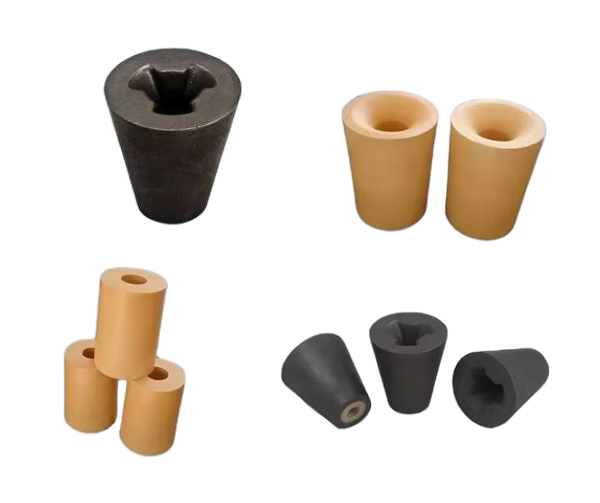
The term metering nozzle is most commonly used to describe the refractory nozzle installed at the bottom of the tundish, directly above the submerged entry nozzle (SEN). Its primary purpose is to “meter,” or accurately regulate, the quantity of molten steel flowing from the tundish into the mold. Because of its position and function, the metering nozzle operates under extremely severe thermal, chemical, and mechanical conditions.
This article provides a detailed explanation of what a metering nozzle is, including its definition, structure, working principle, materials, operating environment, common designs, and its critical role in continuous casting.
2. Definition of a Metering Nozzle
A metering nozzle is a precision-engineered refractory component used in continuous casting to control and stabilize the flow of molten steel from the tundish to the submerged entry nozzle. It works in conjunction with a stopper rod system or, in some cases, a slide gate system.
In simple terms, the metering nozzle:
Defines the flow passage for molten steel
Determines the basic flow rate through its bore diameter
Provides a sealing and contact surface for the stopper rod
Protects the steel stream from air aspiration and reoxidation
Because of these functions, the metering nozzle is not merely a passive channel, but an active flow-control element in the casting system.
3. Position of the Metering Nozzle in the Casting System
3.1 Location in the Tundish
The metering nozzle is installed at the bottom of the tundish, directly aligned with the submerged entry nozzle. It is typically embedded in the tundish bottom refractory lining and forms the final outlet through which steel exits the tundish.
The typical flow sequence is:
Ladle → Tundish → Metering Nozzle → SEN → Mold
3.2 Interaction with Other Components
The metering nozzle works closely with several key components:
Stopper rod: regulates flow by opening or closing the nozzle bore
Submerged entry nozzle (SEN): delivers steel into the mold
Tundish bottom blocks: provide structural support and sealing
Argon supply system (in some designs): assists anti-clogging
The compatibility and alignment of these components are critical to metering nozzle performance.
4. Basic Structure of a Metering Nozzle
4.1 Overall Geometry
A typical metering nozzle has:
A cylindrical or slightly conical outer shape
A precisely machined central bore
A flat or profiled upper surface for stopper rod contact
A lower interface designed to connect with the SEN
The bore diameter usually ranges from 10 mm to 30 mm, depending on casting speed, strand size, and steel grade.
4.2 Bore Design
The internal bore is the most critical functional area. It is designed to:
Provide smooth steel flow
Minimize turbulence
Reduce inclusion adhesion
Maintain dimensional stability during casting
Some designs include a straight bore, while others use slightly tapered or profiled bores to optimize flow characteristics.
4.3 Composite and Insert Structures
Modern metering nozzles often adopt a composite design, such as:
Zirconia or high-purity alumina insert at the bore
Alumina-carbon or alumina-magnesia body
Transition layers to reduce thermal stress
This design allows different materials to perform specific functions within the same nozzle.
5. Materials Used in Metering Nozzles
5.1 Alumina-Based Materials
High-alumina refractories are widely used due to their:
High refractoriness
Good mechanical strength
Reasonable corrosion resistance
However, alumina alone can be prone to clogging when casting aluminum-killed steels.
5.2 Alumina-Carbon (Al₂O₃–C)
Alumina-carbon materials are the most common choice for metering nozzles because carbon:
Improves thermal shock resistance
Reduces wettability by molten steel
Helps prevent inclusion adhesion
To protect carbon from oxidation, antioxidants such as aluminum, silicon, or boron carbide are added.
5.3 Zirconia-Based Materials
Zirconia (ZrO₂) inserts or full zirconia nozzles are used for high-performance applications. Their advantages include:
Extremely low wettability
Excellent corrosion resistance
Superior anti-clogging behavior
These nozzles are often used for clean steels and long casting sequences.
6. Working Principle of a Metering Nozzle
6.1 Flow Regulation Mechanism
The metering nozzle itself defines the maximum flow capacity through its bore diameter. Fine flow adjustment is achieved by the stopper rod:
When the stopper rod lowers, the bore is closed
When the stopper rod lifts, steel flows through the annular gap
The opening degree controls the flow rate
The metering nozzle provides a stable, repeatable geometry against which the stopper rod operates.
6.2 Gravity-Driven Steel Flow
Molten steel flows through the metering nozzle under hydrostatic pressure created by the steel head in the tundish. The nozzle must maintain structural integrity and dimensional stability under this pressure throughout casting.
6.3 Flow Stabilization Function
By smoothing the steel stream before it enters the SEN, the metering nozzle:
Reduces turbulence
Minimizes slag entrainment
Improves mold level stability
This stabilization is essential for surface quality and internal cleanliness of the cast product.
7. Operating Conditions and Challenges
7.1 High Thermal Load
The metering nozzle is exposed to:
Molten steel temperatures above 1550 °C
Severe thermal gradients during startup and shutdown
Repeated thermal cycling
Materials must therefore have excellent thermal shock resistance.
7.2 Chemical Attack
The nozzle is in constant contact with:
Molten steel containing reactive elements
Tundish slag with varying oxidation potential
Chemical reactions can degrade the bore surface and promote clogging.
7.3 Mechanical Stress
Mechanical stresses arise from:
Stopper rod movement
Contact pressure at the sealing surface
Vibration during casting
These stresses can lead to wear, cracking, or deformation if not properly managed.
8. Common Types of Metering Nozzles
8.1 Conventional Metering Nozzles
These use alumina or alumina-carbon materials and rely on proper steel and slag control to prevent clogging.
8.2 Anti-Clogging Metering Nozzles
Designed with:
Zirconia inserts
Optimized bore geometry
Reduced surface roughness
They are widely used for aluminum-killed steels.
8.3 Argon-Purged Metering Nozzles
These nozzles incorporate gas channels that allow argon injection along the bore wall to:
Prevent inclusion adhesion
Reduce reoxidation
Improve casting stability
9. Importance of the Metering Nozzle in Steel Quality
The performance of the metering nozzle directly affects:
Mold level stability
Inclusion distribution
Surface and internal defects
Casting speed consistency
Poor nozzle performance can negate the benefits of upstream refining and tundish metallurgy.
10. Installation and Operational Considerations
Proper installation is essential:
Accurate alignment with the stopper rod and SEN
Secure sealing to prevent air aspiration
Controlled preheating to avoid thermal shock
Operational discipline is equally important to ensure stable nozzle performance.
11. Future Development Trends
Metering nozzle technology continues to evolve toward:
Functionally graded materials
Improved anti-clogging designs
Better integration with argon systems
Enhanced dimensional accuracy
These developments aim to support higher casting speeds, longer sequences, and stricter steel cleanliness requirements.

12. Conclusion
A metering nozzle is a critical flow-control refractory component in continuous casting, responsible for accurately regulating molten steel flow from the tundish to the mold. Its performance depends on careful design, advanced materials, precise manufacturing, and proper operation.
Although small in size, the metering nozzle has a disproportionate impact on casting stability, steel cleanliness, and operational safety. A thorough understanding of what a metering nozzle is and how it functions is therefore essential for anyone involved in modern steelmaking and continuous casting operations.
LADLE SHROUD sub entry shroud slide gate plate
In modern continuous casting operations, precise control of molten steel flow is essential to ensure stable casting, high steel cleanliness, and consistent product quality. One of the most important refractory components responsible for this control is the metering nozzle. Although relatively small in size, the metering nozzle plays a decisive role in regulating steel flow rate, stabilizing mold level, and protecting molten steel from secondary oxidation.
The term metering nozzle is most commonly used to describe the refractory nozzle installed at the bottom of the tundish, directly above the submerged entry nozzle (SEN). Its primary purpose is to “meter,” or accurately regulate, the quantity of molten steel flowing from the tundish into the mold. Because of its position and function, the metering nozzle operates under extremely severe thermal, chemical, and mechanical conditions.
This article provides a detailed explanation of what a metering nozzle is, including its definition, structure, working principle, materials, operating environment, common designs, and its critical role in continuous casting.
2. Definition of a Metering Nozzle
A metering nozzle is a precision-engineered refractory component used in continuous casting to control and stabilize the flow of molten steel from the tundish to the submerged entry nozzle. It works in conjunction with a stopper rod system or, in some cases, a slide gate system.
In simple terms, the metering nozzle:
Defines the flow passage for molten steel
Determines the basic flow rate through its bore diameter
Provides a sealing and contact surface for the stopper rod
Protects the steel stream from air aspiration and reoxidation
Because of these functions, the metering nozzle is not merely a passive channel, but an active flow-control element in the casting system.
3. Position of the Metering Nozzle in the Casting System
3.1 Location in the Tundish
The metering nozzle is installed at the bottom of the tundish, directly aligned with the submerged entry nozzle. It is typically embedded in the tundish bottom refractory lining and forms the final outlet through which steel exits the tundish.
The typical flow sequence is:
Ladle → Tundish → Metering Nozzle → SEN → Mold
3.2 Interaction with Other Components
The metering nozzle works closely with several key components:
Stopper rod: regulates flow by opening or closing the nozzle bore
Submerged entry nozzle (SEN): delivers steel into the mold
Tundish bottom blocks: provide structural support and sealing
Argon supply system (in some designs): assists anti-clogging
The compatibility and alignment of these components are critical to metering nozzle performance.
4. Basic Structure of a Metering Nozzle
4.1 Overall Geometry
A typical metering nozzle has:
A cylindrical or slightly conical outer shape
A precisely machined central bore
A flat or profiled upper surface for stopper rod contact
A lower interface designed to connect with the SEN
The bore diameter usually ranges from 10 mm to 30 mm, depending on casting speed, strand size, and steel grade.
4.2 Bore Design
The internal bore is the most critical functional area. It is designed to:
Provide smooth steel flow
Minimize turbulence
Reduce inclusion adhesion
Maintain dimensional stability during casting
Some designs include a straight bore, while others use slightly tapered or profiled bores to optimize flow characteristics.
4.3 Composite and Insert Structures
Modern metering nozzles often adopt a composite design, such as:
Zirconia or high-purity alumina insert at the bore
Alumina-carbon or alumina-magnesia body
Transition layers to reduce thermal stress
This design allows different materials to perform specific functions within the same nozzle.
5. Materials Used in Metering Nozzles
5.1 Alumina-Based Materials
High-alumina refractories are widely used due to their:
High refractoriness
Good mechanical strength
Reasonable corrosion resistance
However, alumina alone can be prone to clogging when casting aluminum-killed steels.
5.2 Alumina-Carbon (Al₂O₃–C)
Alumina-carbon materials are the most common choice for metering nozzles because carbon:
Improves thermal shock resistance
Reduces wettability by molten steel
Helps prevent inclusion adhesion
To protect carbon from oxidation, antioxidants such as aluminum, silicon, or boron carbide are added.
5.3 Zirconia-Based Materials
Zirconia (ZrO₂) inserts or full zirconia nozzles are used for high-performance applications. Their advantages include:
Extremely low wettability
Excellent corrosion resistance
Superior anti-clogging behavior
These nozzles are often used for clean steels and long casting sequences.
6. Working Principle of a Metering Nozzle
6.1 Flow Regulation Mechanism
The metering nozzle itself defines the maximum flow capacity through its bore diameter. Fine flow adjustment is achieved by the stopper rod:
When the stopper rod lowers, the bore is closed
When the stopper rod lifts, steel flows through the annular gap
The opening degree controls the flow rate
The metering nozzle provides a stable, repeatable geometry against which the stopper rod operates.
6.2 Gravity-Driven Steel Flow
Molten steel flows through the metering nozzle under hydrostatic pressure created by the steel head in the tundish. The nozzle must maintain structural integrity and dimensional stability under this pressure throughout casting.
6.3 Flow Stabilization Function
By smoothing the steel stream before it enters the SEN, the metering nozzle:
Reduces turbulence
Minimizes slag entrainment
Improves mold level stability
This stabilization is essential for surface quality and internal cleanliness of the cast product.
7. Operating Conditions and Challenges
7.1 High Thermal Load
The metering nozzle is exposed to:
Molten steel temperatures above 1550 °C
Severe thermal gradients during startup and shutdown
Repeated thermal cycling
Materials must therefore have excellent thermal shock resistance.
7.2 Chemical Attack
The nozzle is in constant contact with:
Molten steel containing reactive elements
Tundish slag with varying oxidation potential
Chemical reactions can degrade the bore surface and promote clogging.
7.3 Mechanical Stress
Mechanical stresses arise from:
Stopper rod movement
Contact pressure at the sealing surface
Vibration during casting
These stresses can lead to wear, cracking, or deformation if not properly managed.
8. Common Types of Metering Nozzles
8.1 Conventional Metering Nozzles
These use alumina or alumina-carbon materials and rely on proper steel and slag control to prevent clogging.
8.2 Anti-Clogging Metering Nozzles
Designed with:
Zirconia inserts
Optimized bore geometry
Reduced surface roughness
They are widely used for aluminum-killed steels.
8.3 Argon-Purged Metering Nozzles
These nozzles incorporate gas channels that allow argon injection along the bore wall to:
Prevent inclusion adhesion
Reduce reoxidation
Improve casting stability
9. Importance of the Metering Nozzle in Steel Quality
The performance of the metering nozzle directly affects:
Mold level stability
Inclusion distribution
Surface and internal defects
Casting speed consistency
Poor nozzle performance can negate the benefits of upstream refining and tundish metallurgy.
10. Installation and Operational Considerations
Proper installation is essential:
Accurate alignment with the stopper rod and SEN
Secure sealing to prevent air aspiration
Controlled preheating to avoid thermal shock
Operational discipline is equally important to ensure stable nozzle performance.
11. Future Development Trends
Metering nozzle technology continues to evolve toward:
Functionally graded materials
Improved anti-clogging designs
Better integration with argon systems
Enhanced dimensional accuracy
These developments aim to support higher casting speeds, longer sequences, and stricter steel cleanliness requirements.
12. Conclusion
A metering nozzle is a critical flow-control refractory component in continuous casting, responsible for accurately regulating molten steel flow from the tundish to the mold. Its performance depends on careful design, advanced materials, precise manufacturing, and proper operation.
Although small in size, the metering nozzle has a disproportionate impact on casting stability, steel cleanliness, and operational safety. A thorough understanding of what a metering nozzle is and how it functions is therefore essential for anyone involved in modern steelmaking and continuous casting operations.
LADLE SHROUD sub entry shroud slide gate plate